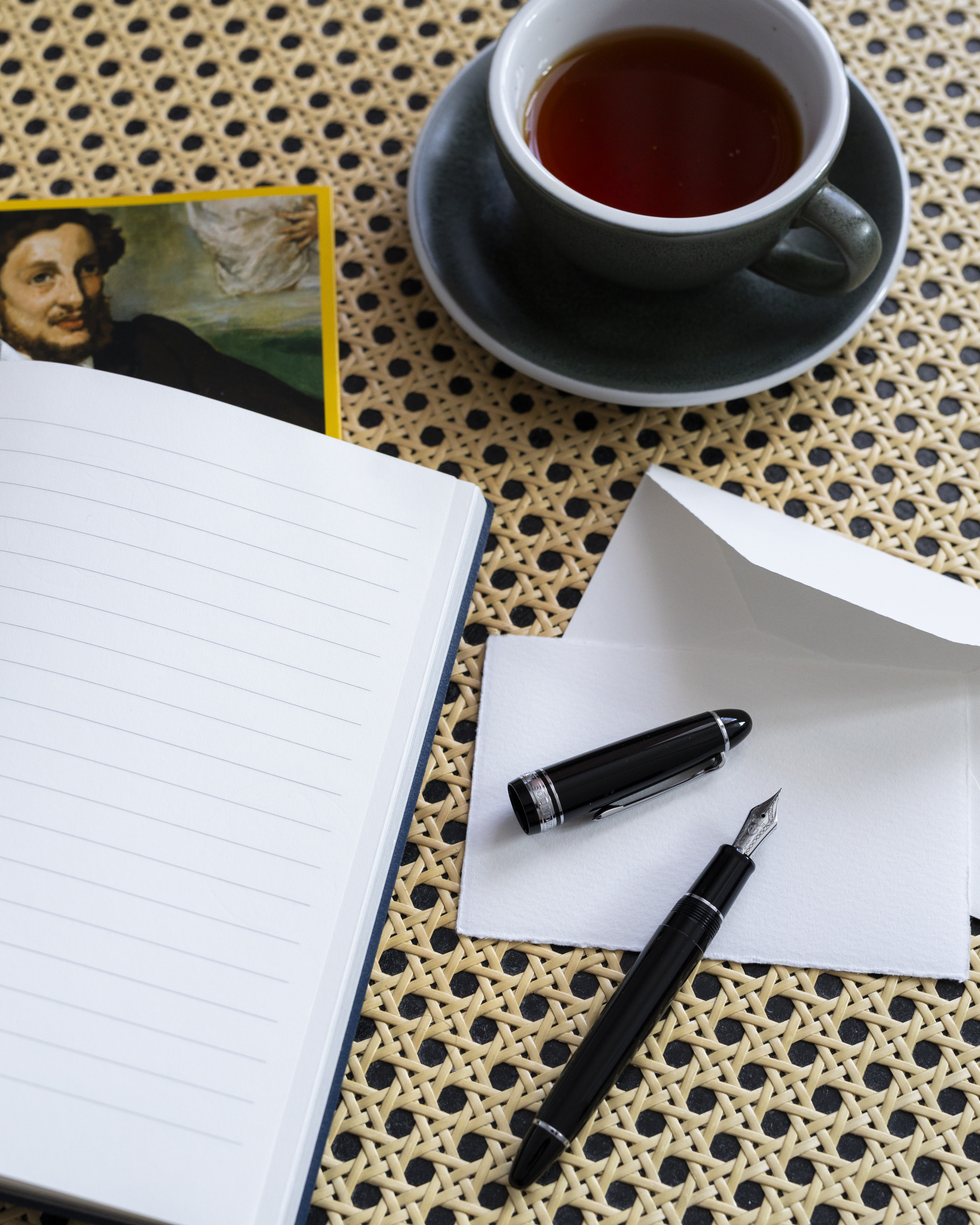
Writing—like reading, meditation, or any mindful ritual—has the power to shift our mood and center our thoughts. Yet for many who haven’t experienced it the right way, it can feel dull or outdated. And yes, if you treat it like a task, rush through it, or use tools that make it feel ordinary, writing can seem boring.
But slow down—pick up a good fountain pen, watch the ink flow across the paper, and write with intention. You might be surprised how quickly it becomes your favorite part of the day. For me, it’s become a ritual, a small daily pleasure I turn to for quiet, to step away from the noise and escape my hectic routine.
In today’s article, I’d like to share a few helpful tips—along with valuable insights from collectors—on how to turn a “boring” writing session into something you look forward to each day, maybe even your favorite activity.

The Fountain Pen
The pen is at the forefront of any memorable writing session, and for enthusiasts, this choice is anything but arbitrary. I believe a good fountain pen can significantly enrich one’s writing session, it certainly does in my case. Many users say that design plays a big role in their experience, and the more thoughtful the details or the shape, the more they find themselves drawn into the act of writing. To me, size and weight matter just as much as design. A pen that’s too light, too heavy, or awkwardly proportioned can take all the pleasure out of writing. Most people prefer heavier pens because they convey a sense of quality and often require less pressure on the page. The weight helps guide the nib more naturally across the paper, making writing feel smoother and more controlled.

“I have a particular love for heavier pens—those that approach the 100-gram mark. With that kind of heft, it almost feels as though the pen writes on its own; the hand becomes simply a guide,” says Kirsche.
The nib also plays a crucial role in how a pen feels on paper. It’s no surprise that many writers stick to specific materials, especially gold, or particular brands and sizes, to ensure the best experience.
“My Sailor King of Pens collection has really taken off this year. It’s the best nib I have, and it’s not even close. The medium 21k nib from Sailor is in a league of its own. The way it writes, the ink flow—everything about the pen is almost perfect. The only downside for me is the cartridge converter system; it’s way too small. And with that ink flow, I find myself refilling it more often than I’d like,” adds Jeff S. While the filling system in Sailor pens leaves room for improvement, the superb 21k nib more than compensates for it.

The Ink, the Paper, and the Ritual of Refilling
The ink and the paper complete the circle—they’re just as essential to the writing experience as the pen itself.
Let me give you an example: imagine you grab some standard black ink and an A4 sheet, then start writing. Chances are, you’ll lose interest quickly. There’s no visual appeal in the ink, and the paper’s texture doesn’t help either.
Now try this: choose an ink in your favorite color and pair it with high-quality, fountain pen-friendly paper. Suddenly, everything changes. The colors come alive, the paper feels right, and the entire experience becomes far more enjoyable.

As for paper, anything fountain pen–friendly will do the job, but some brands are worth prioritizing for the best experience. Consider names like Tomoe River, Midori MD, Montblanc, Clairefontaine, and others known for their quality and ink handling.
“My Tomoe River notebooks are my go-to. Also, my William Hannah notebook is right up there and I carry it with me everywhere,” says Jeff S.
Refilling—though it may seem bothersome when it happens too often—is, in my view, one of the best parts of a writing session. In fact, there’s something undeniably tactile and satisfying about it. The process itself slows you down, makes you present, and adds a quiet sense of intention to the entire experience.

The Environment
I like my coffee at home, but I have to admit, it tastes different in the city.
Even when I use the same beans, the atmosphere changes everything. The buzz of the street, the café vibe, it just hits differently. And writing is the same way. Don’t expect it to stay enjoyable if you’re always sitting at the same desk. Eventually, the routine dulls the experience. Instead, create a space that feels fresh and inspiring—or go out and find one.

I often head to specific spots, order a drink, take out my notebook, and write for 20 minutes. It resets my mind. Surround yourself with things that spark something in you: maybe it’s a candle, a glass of scotch, a cup of tea, or a slice of cake. Those little touches make the moment feel special. And that’s where the magic happens.
“Home office with a nice pour of extra añejo along with some nice jazz music equals a cathartic experience for me,” says Jeff S.
The Purpose
Beyond tools and atmosphere, perhaps the most important ingredient is intention. Writing becomes meaningful when what’s being captured feels valuable.
“It’s all about the importance you put in what’s written on a piece of paper. It’s not a note that gets lost in a phone. Knowing you’re doing something worth your time increases creativity and the ability to come up with new ideas without resorting to AI or digital shortcuts,” says MQ
I wouldn’t be overly strict about writing, but intention really does matter.
Think of it this way: would you head out on a difficult hike without a plan? Probably not. So why approach writing without one?
Before you begin, take a moment to define what you want to write. Ask yourself why you’re writing. Maybe it’s a journal entry, a few thoughts, or your goals for the next few weeks. Giving your writing a clear direction not only brings focus but also anchors you in the process. It turns the act of writing into something purposeful and rewarding.
Try putting some of these tips into practice, and I’m sure you’ll notice the difference. But I’d love to hear your thoughts: what makes writing feel truly enjoyable for you?
Condividi:
- Click to share on X (Opens in new window) X
- Click to share on Facebook (Opens in new window) Facebook
- Click to share on WhatsApp (Opens in new window) WhatsApp
- Click to share on LinkedIn (Opens in new window) LinkedIn
- Click to share on Pinterest (Opens in new window) Pinterest
- Click to share on Telegram (Opens in new window) Telegram
- Click to email a link to a friend (Opens in new window) Email


Leave a Reply