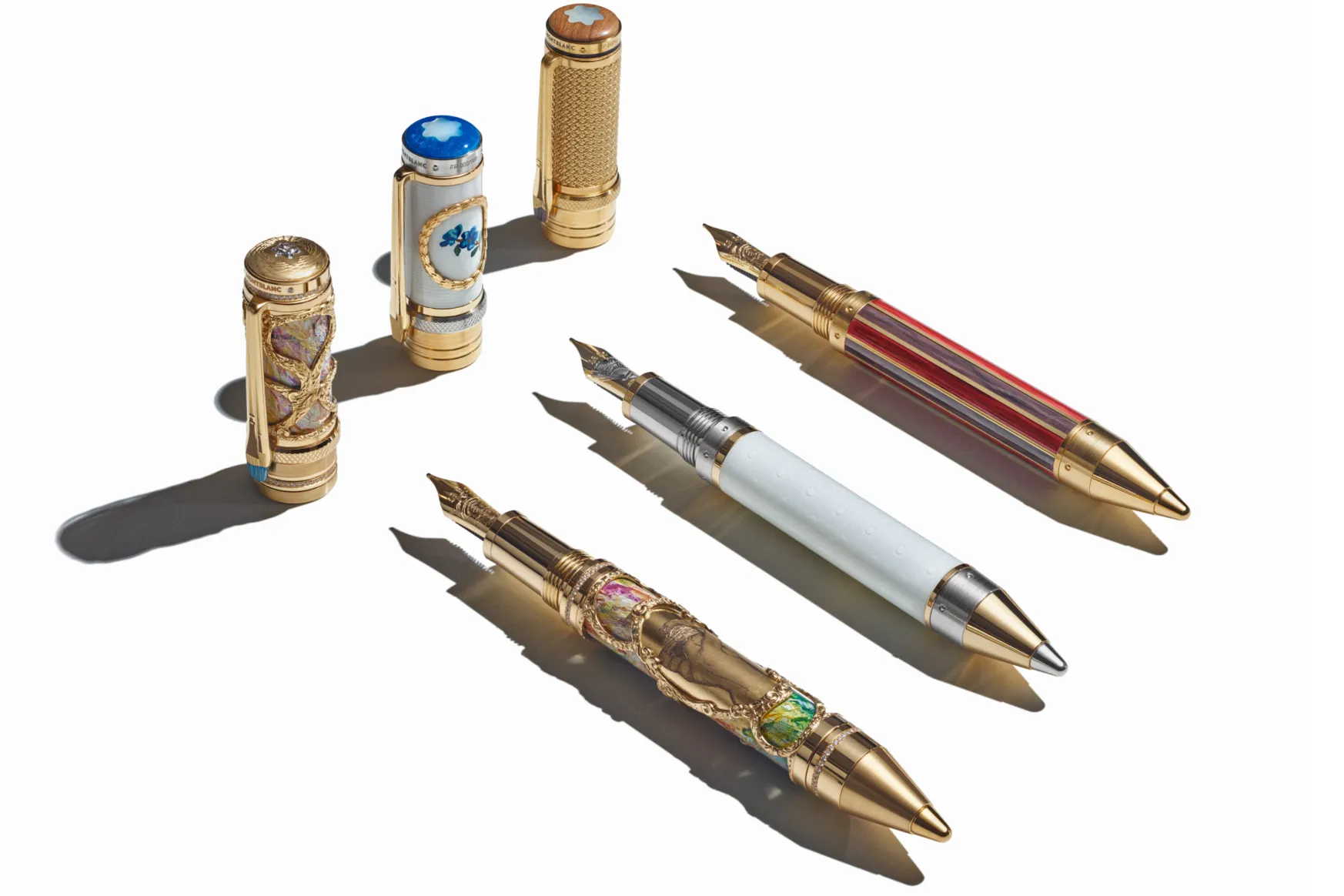
Sometimes, even the grandest legacies can trace their origins to humble beginnings. This is the true story of Pierre-Auguste Renoir – one of the greatest modern French painters and a leading figure of the Impressionist movement. His legacy inspired Montblanc to design the latest Masters of Art collection — a tribute that echoes Renoir’s distinctive brushwork, masterful use of color and light, and his early beginnings in porcelain painting.
About Pierre-Auguste Renoir
Born in Limoges, France, in 1841 to a tailor and a seamstress, Pierre-Auguste Renoir rose from a porcelain factory apprentice to become one of the greatest French painters. Growing up in a modest family, young Renoir was introduced to painting at the age of 13 through an apprenticeship at a porcelain factory, shortly after his family moved to Paris in search of better opportunities. The period he spent painting on porcelain inspired him to broaden his artistic horizons and laid the foundation for his future as a painter, as the job refined his precision, delicacy, and attention to detail.
In 1862, while preparing to enter the prestigious École des Beaux-Arts, Renoir joined the studio of Swiss painter Charles Gleyre, where he befriended fellow students Alfred Sisley, Frédéric Bazille, and Claude Monet, with whom he would maintain a long friendship. Among his iconic paintings are Dance at Le Moulin de la Galette, Luncheon of the Boating Party, and The Swing. These paintings illustrate the joy and beauty of everyday life, especially in late 19th-century France. His works often capture lively scenes of social gatherings, landscapes, and intimate portraits, all bathed in natural light and painted with vibrant colors and soft brushstrokes.

In his later years, Pierre-Auguste Renoir’s style changed significantly as he moved away from Impressionism towards a more classical approach, inspired by Renaissance artists and classical sculptures. This shift is seen in his masterpiece, The Bathers (Les Grandes Baigneuses), finished between 1918 and 1919. The painting highlights Renoir’s interest in classical themes, depicting fuller figures with gentle, rounded shapes that represent his quest for ideal beauty. Even though he struggled with severe arthritis, Renoir remained dedicated, passionately painting until the end of his life.
The Montblanc Masters of Art Collection
Each of the five editions in the The Masters of Art collection depicts different parts of the artist’s work with Limited Edition 4810 showcasing Renoir’s lifelong fascination with colour and nature. The cap and barrel are made from olive wood, nodding to the olive groves at his estate, Les Collettes, in southern France. Strokes of hand-applied paint in green, blue, yellow, light rose, and grey reflect the tonal energy of Renoir’s brushwork. On top of the cap, there is a blue Montblanc emblem in precious resin, recalling Renoir’s words: “One morning, one of us, lacking black, used blue: Impressionism was born.” The gold-coated clip shaped like two different paintbrushes illustrates the artist’s evolving style, while the year “1874” engraved on the cap ring marks the first Impressionist exhibition. The solid Au 750 yellow gold nib is decorated with a folding fan—an element often seen in Renoir’s portraits while the Ag 925 silverpoint tip at the cone is both a technical feature and a reference to his drawing skills.

The Limited Edition 888 honors Renoir’s early days as a porcelain painter. The design features a translucent white lacquer surface and a cap motif framed in solid Au 750 yellow gold, showcasing a flower detail drawn from his porcelain work. The cap and barrel include Louis XVI-style engravings, drawing from 19th-century French silverwork. On the cap ring an engraving “1854,” commemorates the year Renoir began his porcelain apprenticeship. The nib reiterates the fan motif and is partly rhodium-coated, while the cone in solid gold contrasts with the Ag 925 silverpoint tip. The Montblanc emblem is made of mother-of-pearl and surrounded by layered shades of blue.

The Limited Edition 161 highlights Renoir’s “Période Nacrée” or “pearly period,” a time when his palette softened into luminous whites and pinks. The edition features mother-of-pearl inlays on the barrel and a finely sculpted relief of Woman with a Hat on the sterling silver cap. The year “1888,” engraved on the cap ring, marks the beginning of this artistic period. Unlike the previous editions, the nib here is engraved with the Greek letter phi (Φ), symbolizing the golden ratio and Renoir’s use of floral elements. The Montblanc emblem is set in a blue-violet stripe of chalcedony, a subtle nod to the iridescence found in his work.

The Limited Edition 92 is inspired by the Luncheon of the Boating Party (1880–1881), one of Renoir’s most recognized works. Here, the cap is made of solid Au 750 gold, and is engraved with a braid pattern reminiscent of the straw hats worn in the painting. The barrel features hand-painted lacquer inlays symbolizing the striped awning from the scene. The cone, also in solid gold, includes a solid Au 999 gold tip designed for sketching.
The Montblanc emblem, crafted from mother-of-pearl, is set in Kalahari Jasper, a nod to the warm tones of Renoir’s composition, while the nib features a motif inspired by Renoir’s 1899 self-portrait. The edition is limited to 92 pieces a reference to 1892, when Renoir’s Two Young Girls at the Piano was acquired by the Musée du Luxembourg—the first Impressionist work to enter a national museum.

The most impressive design in the collection is the Limited Edition 8, which is shaped by The Great Bathers and Renoir’s “Ingresque period” between 1883 and 1887, a phase where the painter’s style leaned towards structure and precision. The year “1883” is engraved on the cap ring, marking the start of this transition. The cap and barrel, crafted from Au 750 gold, are hand-lacquered in the colour palette of the painting.
The central figure seen from the back is engraved in gold using the Bulino technique, a method involving thousands of micro-engravings to capture light and depth. The barrel is framed with a hand-engraved gold overlay styled like a vintage picture frame. The cap fittings are set with rings of brilliant-cut diamonds, as is the gold cone. The nib, decorated with a brilliant-cut diamond, is engraved with Renoir’s self-portrait from 1899. The Montblanc diamond adorns the cap, and the gold base beneath it features a guilloché pattern that matches its shape.
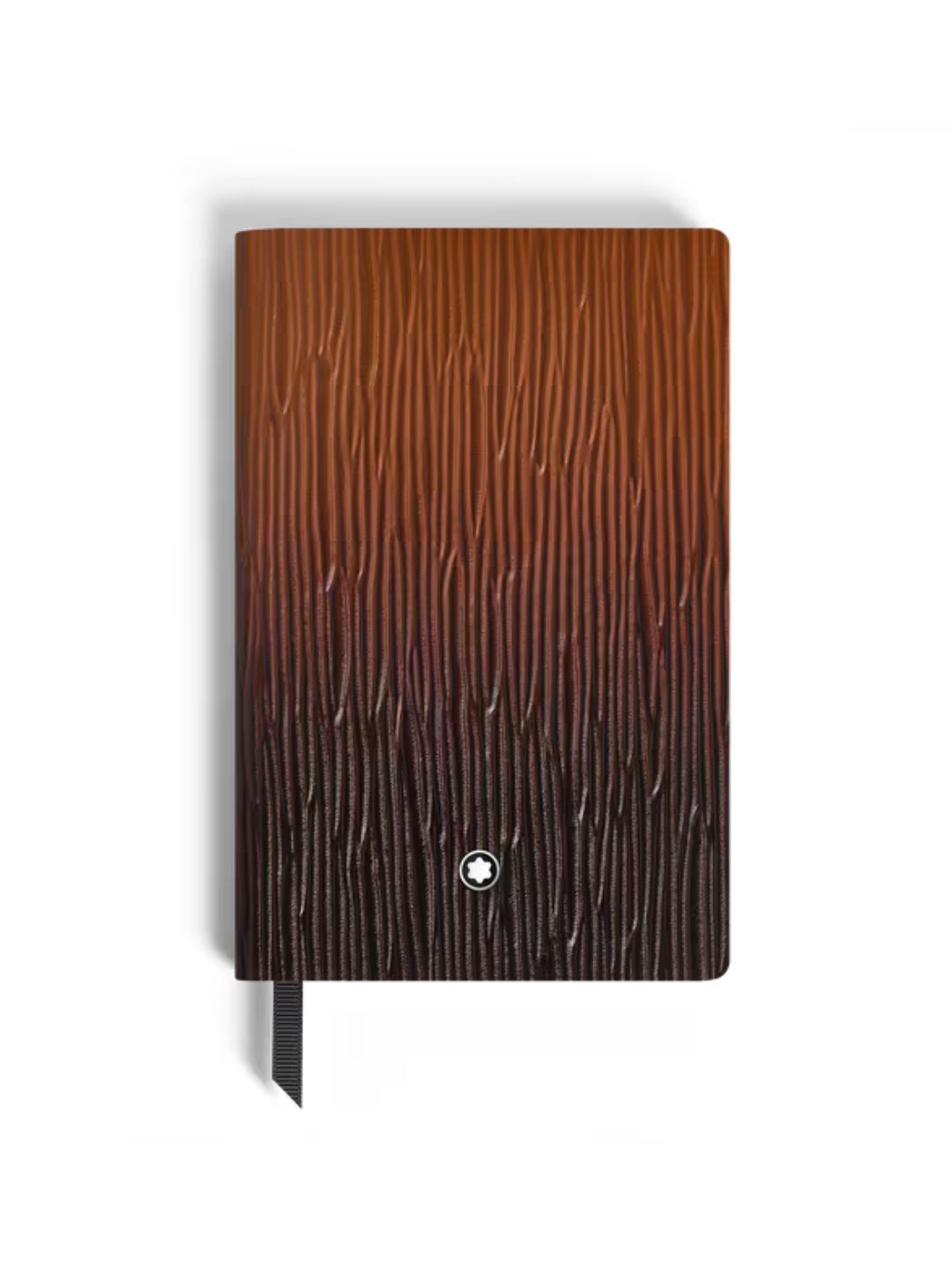
The collection also includes a notebook with Landscape (1916) by Renoir illustrated on the cover, along with a deep purple ink bottle and cufflinks made from steel, sodalite, and mother-of-pearl.

Explore the Montblanc Masters of Art Collection, available at authorized retailers and online at montblanc.com.
Condividi:
- Share on X (Opens in new window) X
- Share on Facebook (Opens in new window) Facebook
- Share on WhatsApp (Opens in new window) WhatsApp
- Share on LinkedIn (Opens in new window) LinkedIn
- Share on Pinterest (Opens in new window) Pinterest
- Share on Telegram (Opens in new window) Telegram
- Email a link to a friend (Opens in new window) Email
Leave a Reply