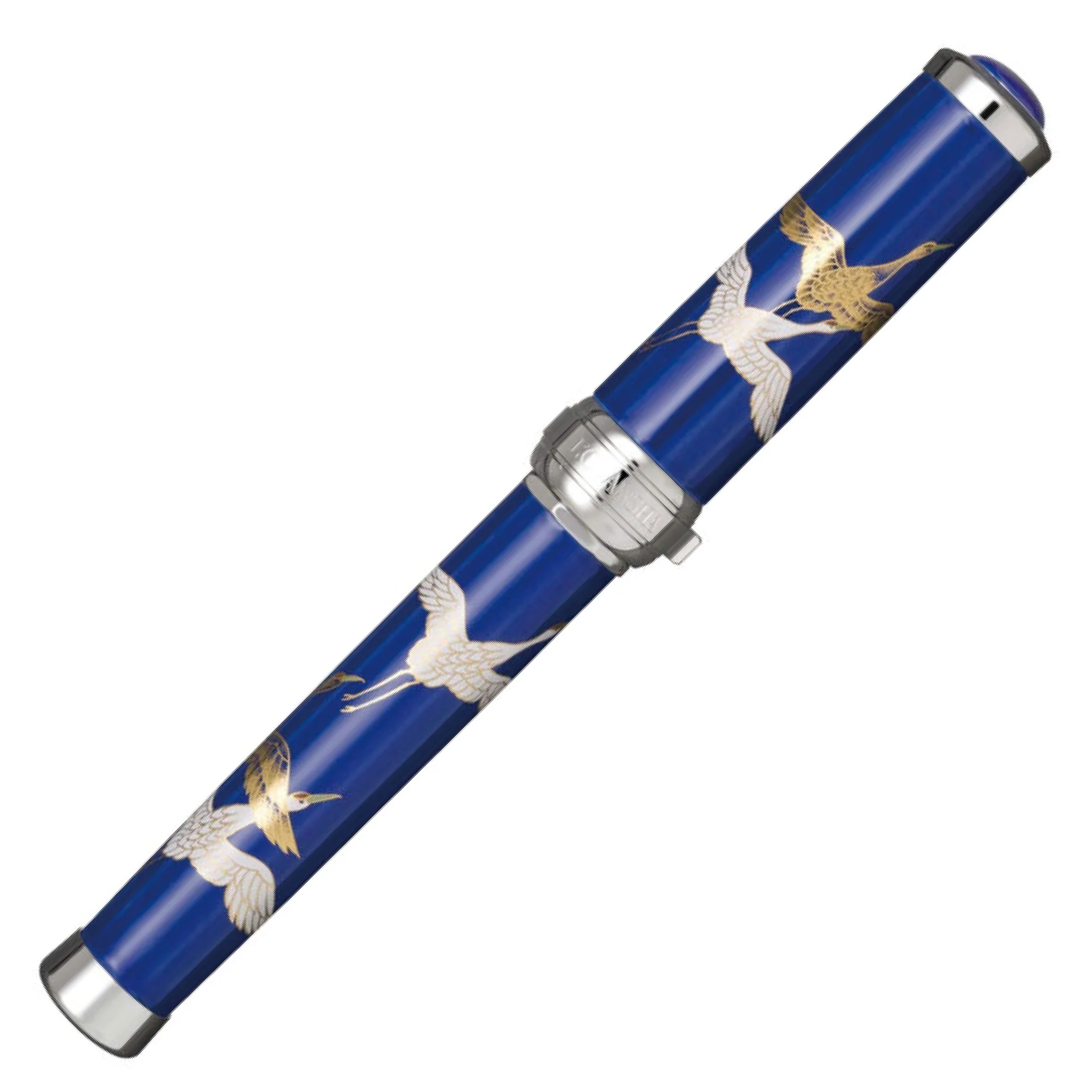
Writing regularly about writing instruments, we’ve come across pieces crafted from all sorts of materials—from wood and ebonite to sterling silver and carbon. Yet while most brands have played it safe, Sailor ventured off the beaten path, embracing a material you’d hardly expect on a fountain pen—typically reserved for ornament: porcelain. The collection marked the 400th anniversary of Arita Yaki—Japan’s first and most celebrated porcelain tradition—with a series of exquisitely decorated limited-edition writing instruments.
The Early Days of Japanese Porcelain
Japan’s legacy of porcelain-making traces back to the early 17th century, when, according to historical records, Korean potter Yi Sam-pyeong discovered kaolin clay near Arita Town in Saga Prefecture.
Until then, Japan had relied on costly imports from China, but now it could create its own. This
discovery laid the foundation for Japan’s porcelain tradition and would go on to shape the course of this craft.

Over the years, Arita’s kilns gained worldwide fame, producing porcelain of such beauty and durability that it was exported via the nearby port of Imari. From the 17th century onward, these pieces traveled aboard Dutch East India Company ships (the main distributor of Arita ware) to Europe, where they graced the tables and cabinets of aristocrats from Amsterdam to Paris—and later inspired some of the finest porcelain manufactories on the continent.
Sailor Arita Yaki 400 Years – Porcelain Reimagined
The commemorative collection pays homage to the time-honored efforts of Japanese artisans who contributed to the rise and evolution of the craft, as well as to the quiet beauty that resides within each piece.
To carry forward this craftsmanship, Sailor partnered with Koransha—a long-established porcelain maker founded during the Meiji era in Arita, Saga Prefecture. For more than 140 years, the company has preserved and refined the traditional techniques and aesthetics of porcelain, creating some of the most exquisite tableware and interior pieces in Japan.

This time, the porcelain company’s expertise went beyond conventional decorative pieces, with artisans taking on a more demanding task: decorating porcelain barrels and caps for writing instruments no more than 22 mm in diameter.
Among the designs is a striking edition in deep blue, adorned with finely detailed miniatures of dancing cranes. The collection also includes a Venetian Red model and a White Porcelain version—a nod to the material’s purity—alongside other noteworthy editions.


Porcelain isn’t the obvious choice for a daily writing instrument, mostly due to its weight and fragile nature, but this pen was never meant for hurried notes—unless you choose otherwise. To me, it belongs to those quiet moments when you slow down and let each word flow with intention. At around 76 grams, it carries a reassuring heft (which I personally enjoy), though many users may find it less comfortable for extended writing sessions. It’s also sturdier than it appears—though it’s porcelain—and with a little extra care, you can keep it free from cracks for years to come.
The unique design of each model is crowned with Sailor’s signature 21k gold nib, offered with matching trim in either gold or rhodium, depending on the model. A cartridge/converter system keeps it practical for everyday use, though many collectors will likely reserve theirs for special occasions.

Why It’s Worth Collecting
This isn’t the first time porcelain has appeared in writing instruments—19th-century European dip pens with porcelain handles and occasional Japanese artisanal collaborations came before—but it has rarely been used in a fully functional fountain pen. Sailor is among the first major, globally recognized manufacturers to change that, introducing porcelain into a limited-production series created for writing, not just display, a fact that makes these pieces all the more collectible.
Explore select pieces from the collection here.
Condividi:
- Share on X (Opens in new window) X
- Share on Facebook (Opens in new window) Facebook
- Share on WhatsApp (Opens in new window) WhatsApp
- Share on LinkedIn (Opens in new window) LinkedIn
- Share on Pinterest (Opens in new window) Pinterest
- Share on Telegram (Opens in new window) Telegram
- Email a link to a friend (Opens in new window) Email

Leave a Reply