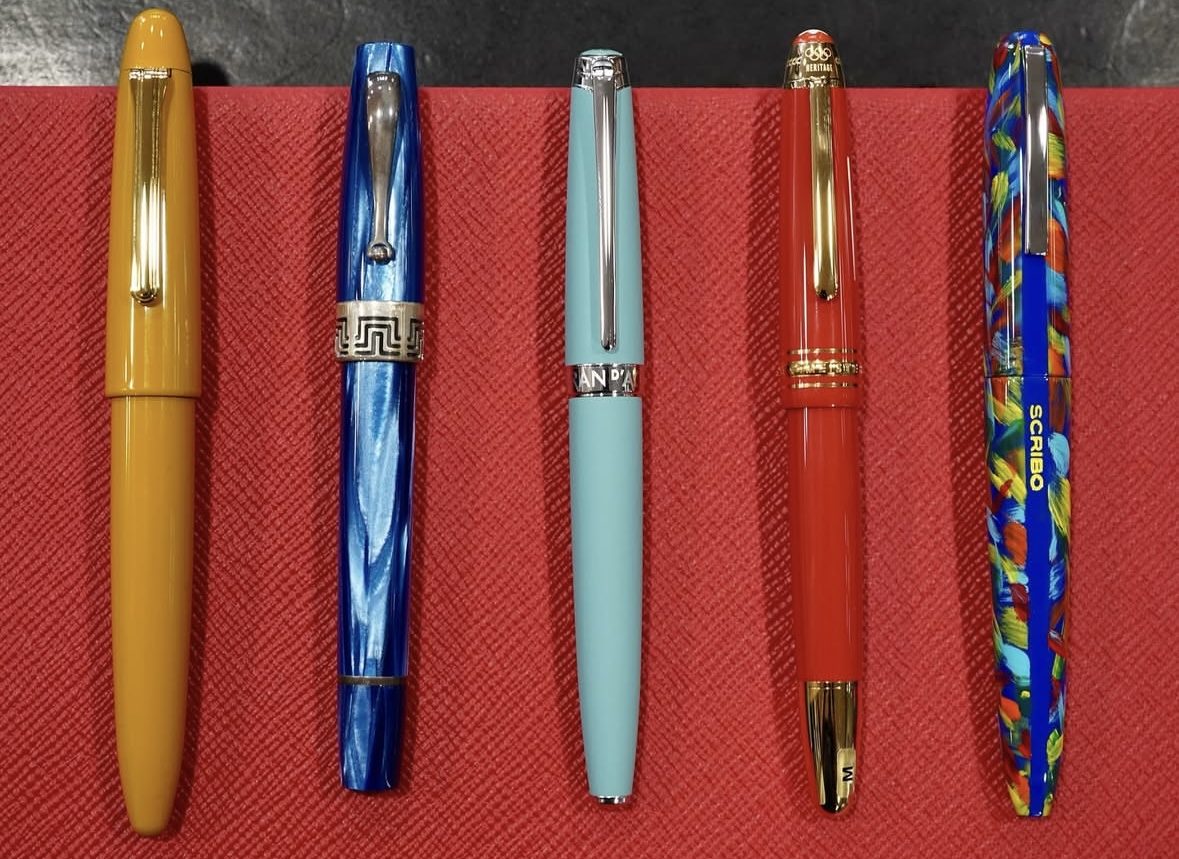
If you’re the type who collects pens—whether fountain pens, ballpoints, or maybe pencils—you’ve probably already run into this problem: too many pens, not enough pages. You realised that some pens sit unused for months (maybe even years), while a handful of favorites get all the love. That’s why I think you’d find this topic useful. In today’s article, I’ll share a few simple tips on how to rotate your pens in order to enjoy your entire collection without letting them dry out or gather dust.
What Is a Pen Rotation?
Well, a pen rotation is exactly what it sounds like: regularly cycling through your pens in a structured way. It’s not just for collectors as you might be tempted to think. It’s for anyone who wants to use their tools with intention. Rotating your pens keeps things fresh, cuts down on dried-up nibs, makes maintenance easier, and reminds you why you fell in love with your collection in the first place.
Why Bother?
Pens are meant to be used, not just admired. Ink dries out, tips clog, and I’m pretty sure you don’t want your most beloved pens serviced unnecessarily (I definitely don’t). Letting pens sit too long is the fastest way to ruin them, but a rotation keeps them in action and helps you spot duds early—before they leak, dry up, or die.
It also cuts down on decision fatigue. When you’ve got dozens of options, it’s easy to waste time picking instead of writing.

Step 1: Choose Your Rotation Size
How many pens should be in your active rotation? It depends on how much you write. A good baseline is 3–5 pens, but you can go for more options if you feel like. Enough for variety, not so many that you lose track.
You might pick:
•A daily writer (smooth, reliable)
•A pen for fast notes (fine tip, quick-drying)
•A fun pen (vivid ink color or a nicely engraved nib)
If you write more—journals, letters, and planner entries—you can extend to 6–8 pens.

Step 2: Set a Timeframe
Decide how often you’ll switch them out. Weekly and monthly are common, but you can also base it on ink usage. For example, use a pen until it runs dry, then replace it with a new one from your stash.
Additionally, you can use a note or a spreadsheet to track which pens are in rotation and when you last used them.
Step 3: Store the Rest Safely
When not in use, pens need care. Make sure all the other pens you’re not using are clean. If so, store them horizontally (especially fountain pens), and keep them away from heat or sun.
Step 4: Make It a Ritual
Switching pens can be a surprisingly fun ritual that even boosts your creativity. Imagine curating a rotation based on your mood or the season. In spring, you might reach for fresher pens in shades of green or yellow, while autumn could call for warm, ambery tones or classic brass finishes.
Conclusion
Whatever you decide, enjoy the process and make handwriting a fun activity. After all, it’s about making the most of what you already love. If you’re serious about using your pens instead of letting them collect dust, this is the way. Fewer wasted pens. More satisfying writing. And a whole lot more joy from the tools already at your fingertips.
Condividi:
- Share on X (Opens in new window) X
- Share on Facebook (Opens in new window) Facebook
- Share on WhatsApp (Opens in new window) WhatsApp
- Share on LinkedIn (Opens in new window) LinkedIn
- Share on Pinterest (Opens in new window) Pinterest
- Share on Telegram (Opens in new window) Telegram
- Email a link to a friend (Opens in new window) Email



Leave a Reply