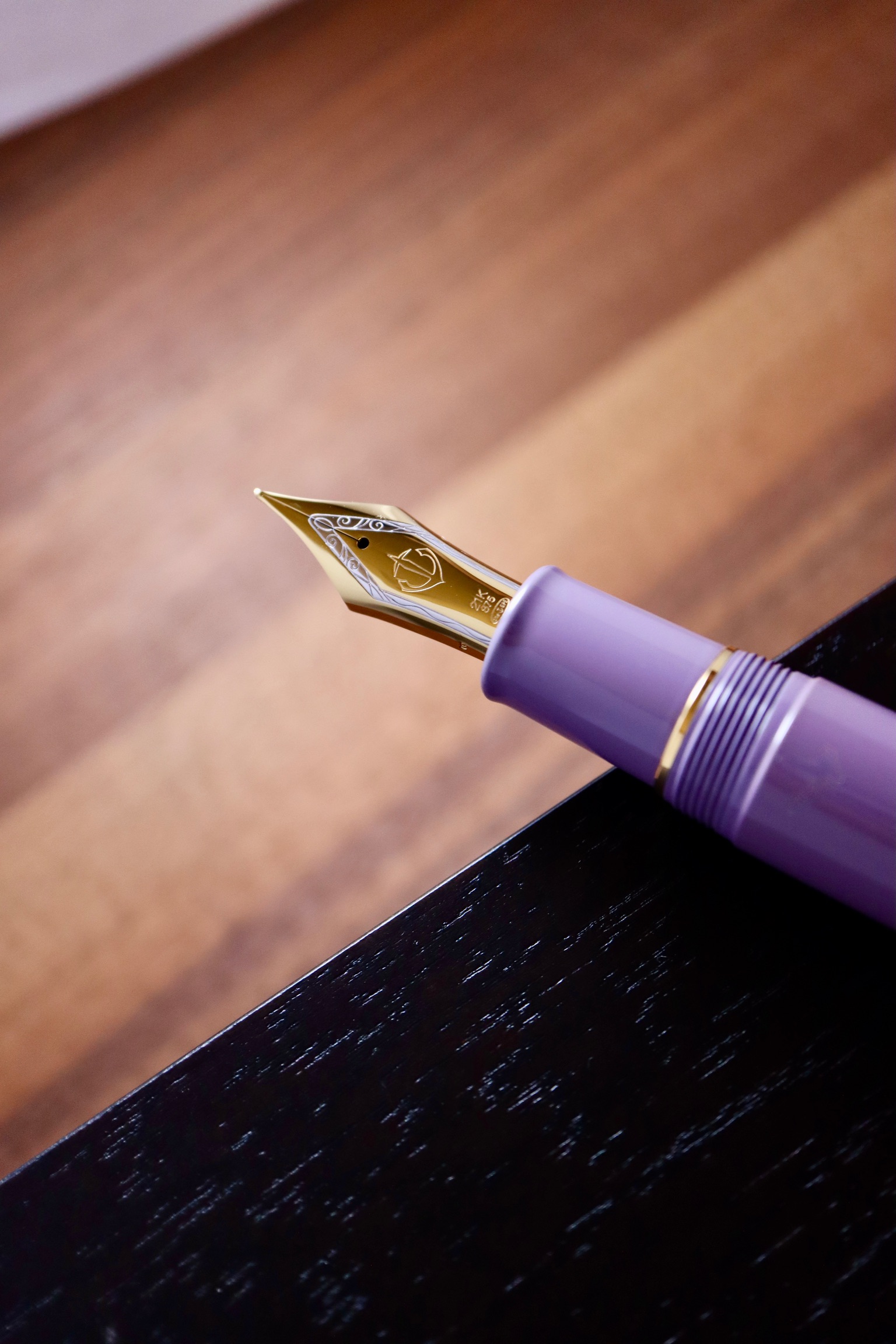
For decades, a golden rule has echoed through the halls of pen fandom: gold nibs are superior to steel. It’s a belief passed down by collectors, sellers, and experts — and while it’s partly true, I wouldn’t say it’s entirely correct.
Let’s break it down.
Gold has long been associated with value, prestige, and craftsmanship — not only as the first material of choice for decorative purposes, but also as one highly prized for its flexibility or corrosion resistance. In the pen industry, gold isn’t just used as a design element — it’s also a go-to material for making nibs. Many high-end brands like Montblanc, Sailor, and Pelikan use gold (14k, 18k, even 21k) as a standard for their nibs. Over the years, gold nibs have sparked plenty of controversy, with many experts claiming they’re superior to steel. But the truth lies somewhere in the middle — and here’s why.

Flexibility vs. Functionality
Gold is softer than steel — that part’s true. This means a gold nib can offer a more “springy” or flexible writing feel, and for certain writers, that gives the impression of smoothness or bounce. However, this flex is minimal in modern gold nibs unless the pen is specifically engineered for it (like Pilot’s Falcon, Scribo’s flex nibs or vintage Waterman pens). Most contemporary gold nibs are actually pretty stiff, tuned for consistency rather than expression.

Steel, on the other hand, is harder and more rigid, which sounds like a drawback until you actually write with a high-quality steel nib. Brands like JoWo, Bock, and even Lamy have proven time and again that steel can be just as smooth and reliable, often outperforming gold nibs in terms of feedback and ink flow. My favorite — and, in fact, many other users’ favorite — steel nib comes from Faber-Castell. And if you give it a try, you might be surprised.
Looking back at my humble beginnings in writing and collecting fountain pens, it was a steel Faber-Castell nib (from the Ambition series, to be precise) that made me fall in love with fountain pens — and eventually opened the door to gold nibs. Also, don’t overlook Japanese brands like Pilot and Platinum — their steel nibs are surprisingly smooth (see the Pilot Metropolitan or Platinum Preppy).

Gold and Corrosion: The Half-Truth
One of the most commonly cited advantages of gold nibs is their resistance to corrosion — and technically, that’s true. Gold doesn’t tarnish or oxidize the way base metals can. But here’s the thing: modern steel nibs are treated or alloyed to resist corrosion extremely well. Stainless steel, often used in nibs today, can hold up beautifully for decades with minimal care. Unless you’re leaving your pen soaked in ink for months at a time or exposing it to extreme humidity, corrosion isn’t likely to be an issue — for either material. So while gold has the edge in theory, in practice, it’s rarely a meaningful advantage.
Are You Paying for Prestige or Performance?
Here’s the kicker: that extra couple of hundred dollars you pay for a gold nib? It’s not always about performance — most of it goes into prestige. And that’s perfectly fine if you, like me, appreciate the craftsmanship and heritage behind a brand and understand that performance is just one part of the story. The truth is, nearly every luxury pen maker equips their finest fountain pens with gold nibs by default — because when you’re buying a Montblanc 149 or a Sailor King of Pen, you expect nothing less than the best.

But here’s the catch: not all gold nibs are created equal. Some can be stiff, overly polished, or poorly tuned right out of the box. While that’s rare with reputable brands that enforce strict quality control before a pen leaves the factory, it does happen, even with the best. And when it does, it can lead to a writing experience that feels too slick, imprecise, or inconsistent. In fact, a badly tuned gold nib can perform worse than a well-made steel nib, especially if there’s misalignment or flow issues.
On the other hand, some budget-friendly steel-nib pens — like the Pilot Metropolitan or the TWSBI Eco — are often praised for writing wonderfully straight out of the box, all while costing a fraction of the price. Of course, you won’t get intricate ornaments, Urushi lacquer, or other design elements that complete the whole experience — but if you’re after practicality, that’s totally fine.

That doesn’t mean gold nibs are bad — far from it. I’d say they’re the natural next step for anyone serious about writing instruments. Once you move beyond mere function and start appreciating true craftsmanship, a gold nib stops feeling like a luxury or an upgrade — it simply becomes the obvious choice. But the idea that every gold nib is better than every steel nib is flat-out wrong — and frankly, outdated.
The Verdict
If you’re just starting out with fountain pens and someone tells you to “go for gold” because it’s better — ask them why. Ask if they’ve ever used a $30 steel-nib pen that wrote better than a $300 gold-nib one. Chances are, they have.
Gold certainly deserves its place and it’s not just about softness or flex. It’s a noble metal, and many of the most beautifully engraved nibs in the world are gold, and that artistry is part of what makes them so prized.

But let’s not pretend gold always means better performance. Steel can be just as smooth, consistent, and expressive — especially when the nib is well-designed and properly tuned.
At the end of the day, nib performance comes down to tuning, design, and personal preference — not just the material. So let’s give steel the credit it deserves. Because sometimes, the best pen isn’t the one with the highest karat — it’s the one that simply writes when you need it to… though, I’ll admit, my 21k Sailor has never let me down.
Condividi:
- Share on X (Opens in new window) X
- Share on Facebook (Opens in new window) Facebook
- Share on WhatsApp (Opens in new window) WhatsApp
- Share on LinkedIn (Opens in new window) LinkedIn
- Share on Pinterest (Opens in new window) Pinterest
- Share on Telegram (Opens in new window) Telegram
- Email a link to a friend (Opens in new window) Email




Leave a Reply to FrankCancel reply