Introducing the Sailor King of Pens Iro-Miyabi Urushi

Sailor has always had a name for itself as an exceptional bearer of tradition. From designs that respect the ethos of Japanese design elements to materials used in their luxury pens, Sailor has created an outstanding representation of the values it has set forth.

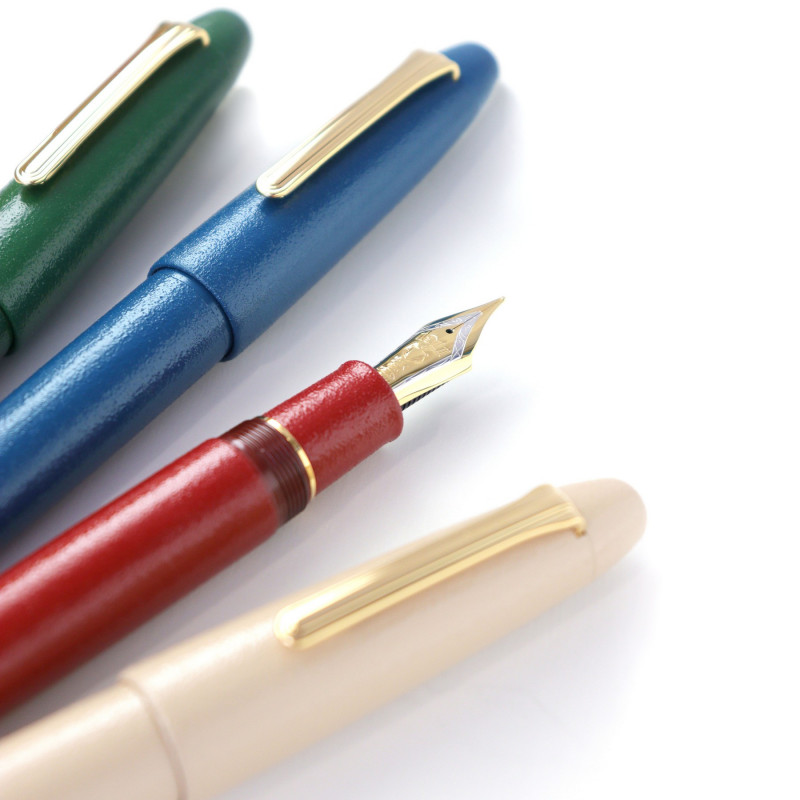
This is no exception with the Sailor Iro-Miyabi. Taking the traditional bullet design made of ebonite of the silhouette, this pen has been elevated by the lacquering technique that gives this pen its unique look. Called Ishime-nuri, it’s a process which enables the surface of the lacquer to have a roughened finish like that of stones.

This initial Ishime-nuri coating is then lacquered atop with other materials to create a masterpiece of technique and colors.

Taking months for the lacquers to dry and the process to be finished, this is another example of Sailor understanding that the final product takes time and there is beauty in the waiting as much as the item itself.

The Ishime-nuri process particularly lends itself to the colors chosen by Sailor for the Iro-Miyabi line, which includes pale pinks and deep reds.  The pen is finished with a 21-karat gold nib, adding the last bit of luxury to the feel of this pen.

One response to “Introducing the Sailor King of Pens Iro-Miyabi Urushi”

  1. […] As you may recall, the Iro-Miyabi series is an homage to the traditional lacquering and art techniques of Japan. The first generation of this series showed us four earth-toned colorways which highlighted the beauty of the various techniques needed to make one of these pens. Now, four new colors are added, only enhancing on the perfected techniques and showcasing the Iro-Miyabi line in a new way. An additional process, called Miyabi-nuri, has been added to the lacquering, giving these pens a special distinction which again highlights the longstanding tradition of Japanese artisans. […]
Leave a Reply

More Articles & Posts

Discover more from Inkstable

Subscribe now to keep reading and get access to the full archive.

Continue reading